The Topic

In recent years, universities, governments and institutions in general have become actively involved in the recognition, acceptance and appreciation of diversity, whether based on gender, social background, ethnicity, sexual orientation or language. Although this diversity is celebrated and seen as a marker of social development, in line with some of the main strategic pillars of the Sustainable Development Goals (UN, 2015), this view is not always shared by everyone, especially by the population. This is the case with linguistic diversity: while different varieties of a language are neither good nor bad, right nor wrong, they are simply different, people have strong and entrenched beliefs about the correct forms of the language and, more dangerously, these views can translate into discriminatory behavior towards speakers of non-standard forms, as evidenced by the education system and the job market. Negative attitudes towards minority languages and non-standard linguistic behavior are often used as criteria for measuring and (self-)evaluating language quality. For example, French spoken in Canada, particularly in minority contexts outside Quebec, is often stigmatized as being far removed from the linguistic norm. Similarly, Brazil's non-urban linguistic communities suffer from the same negative evaluation of their language. Speakers of these dialects may not be taken as seriously as they would like. Although French and Portuguese are among the most codified languages in the world, non-standard grammatical forms continue to characterize the spontaneous, even vernacular, speech of even educated speakers. This workshop focuses on the study of normative grammatical structures, which provoke strong reactions from teachers, intellectuals, writers and the general public. The aim is to understand the interaction between the linguistic system, culture and society, examining linguistic variation and change beyond standard linguistic ideology, and to discuss how to develop tools to mitigate linguistic prejudice and discrimination.

Organizing committee: Salvio Digesto and Rosane Berlinck

Tuesday, October 24, 2023

Dalhousie University
Halifax, NS Canada

Speakers

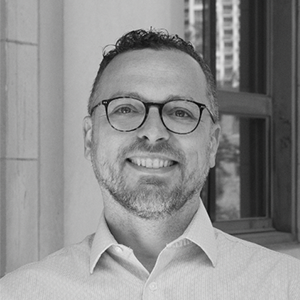
Salvio Digesto

ASSISTANT PROFESSOR

Department of French

Dalhousie University

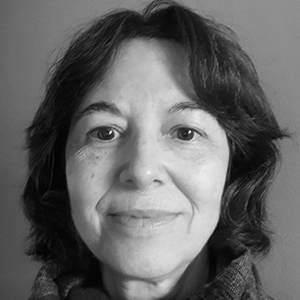
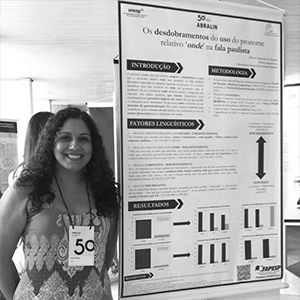
Rosane Berlinck

ASSOCIATE PROFESSOR

Faculdade de Ciências e Letras

SoLAr Research Centre

Universidade Estadual Paulista (UNESP)

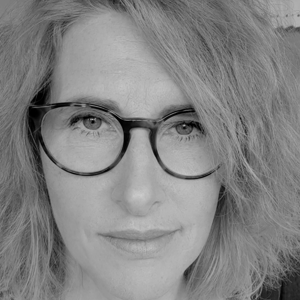
ALESSANDRA STAZZONE

MAÎTRE DE CONFÉRENCES

Faculté des Lettres

U.F.R. d’Études Italiennes

Université Paris-Sorbonne

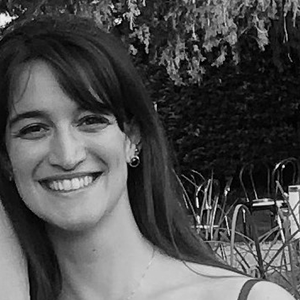
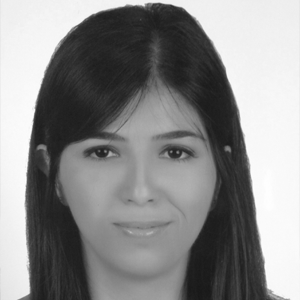
Yasmine Abou Taha

POSTDOCTORAL FELLOW

Department of Historical and Cultural Studies

University of Toronto

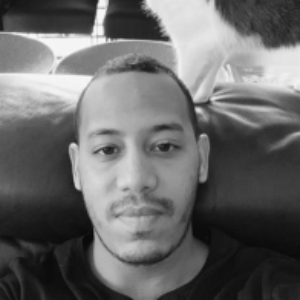
LUCAS DE SOUZA

MA STUDENT

Department of French

Dalhousie University

ELEONORA ZUCCHINI

RESEARCH FELLOW

Department of Interpreting and Translation

Università di Bologna

Milena Aparecida de Almeida

PhD STUDENT

Faculdade de Ciências e Letras

SoLAr Research Centre

Universidade Estadual Paulista (UNESP)

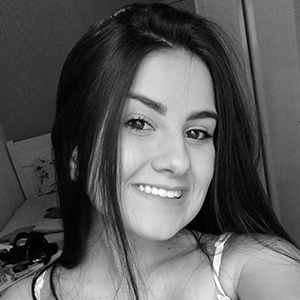
LetÍcia Gaspar Pinto

PhD STUDENT

Faculdade de Ciências e Letras

SoLAr Research Centre

Universidade Estadual Paulista (UNESP)

CONTACT US

If you have any questions or would like to attend the workshop, please send an e-mail to Salvio Digesto at salvio.digesto@dal.ca or click on the link below.

SEND A MESSAGE

SCHEDULE

-
  • Welcome and opening remarks
  • Salvio Digesto

-
  • Cerner la variation syntaxique non standard.
    Le cas des propositions relatives en français acadien et en portugais brésilien
  • Salvio Digesto and Rosane Berlinck
-
  • Explaining syntactic variation by social variables:
    The case of locative relativization strategies in Brazilian Portuguese
  • Milena Aparecida de Almeida

-
  • Un lugubre jargon. Le De Vulgari Eloquentia, une norme impossible?
  • Alessandra Stazzone

-
  • Break
-
  • Indicative and subjunctive alternation:
    investigating teachers' attitudes in Italian students' productions
  • Eleonora Zucchini

-
  • Idéologie Prescriptive vs. Communauté : Une exploration de l’insécurité linguistique
    concernant le mode subjonctif dans le cadre du FLS
  • Lucas De Souza

-
  • Lunch Break
-
  • The social meanings of 1st person plural pronouns in Brazilian Portuguese:
    A study at Cabo Verde-MG and Muzambinho-MG
  • Letícia Gaspar Pinto

-
  • Investigating contact-induced change in Beirut:
    Evidence from Lebanese and Palestinian Arabic
  • Yasmine Abou Taha

-
  • Discussion and closing remarks
  • Salvio Digesto and Rosane Berlinck
EVENT LOCATION

Marion McCain Arts and
Social Sciences Building
6135 University Avenue
Halifax, NS B3H 4R2
Meeting Room 2101

LogoDal


SPECIAL THANKS

We would like to thank Dalhousie University's Office of the Vice-President Research and Innovation for their support.